
Social Media's Enigma: The New 21st Century Tabloid
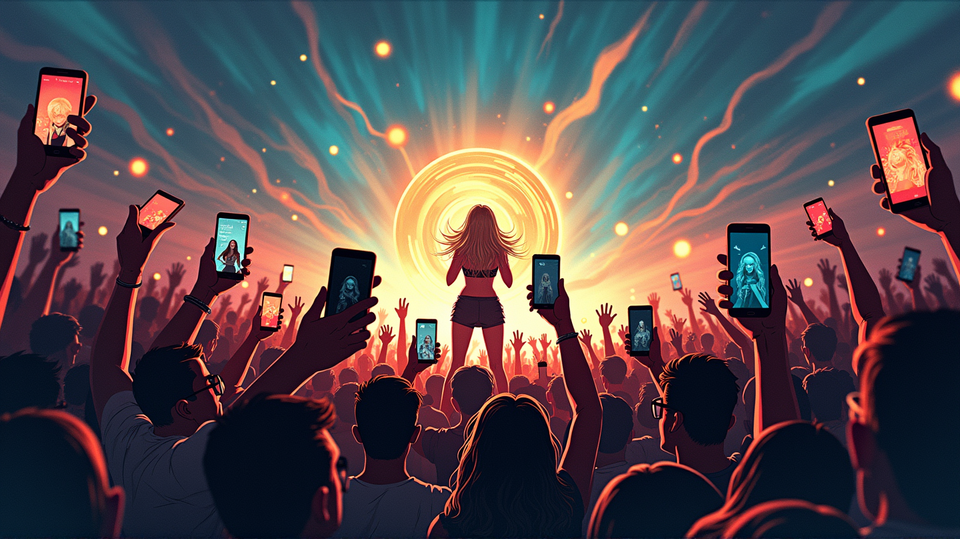
Social media, with its power to democratize content creation, has unwittingly turned itself into a new-age tabloid. It has become a stage where celebrities like Britney Spears perform under an unsolicited global spotlight. As stated in The Week, Britney Spears can now truly live on her own terms, yet an incessant online chorus has emerged, scrutinizing her every move and choice displayed online.
The Chorus of Digital Onlookers
No longer do we rely solely on paparazzi and tabloids for the latest celeb news. Today, anyone with internet access can don the hidden lens and contribute to the cacophony of judgment echoing through social channels. The benevolent audience that once protected Britney and cheered for her freedom now presents a darker undertone with murmurs turning sharply critical.
Pressured by Public Scrutiny
In this digital age, the pressure on public figures has transcended privacy boundaries, weaving a web of constant surveillance and commentary. This omnipresent scrutiny has birthed a new challenge: how can these figures maintain personal liberties under the ceaseless public gaze? How do they balance the tightrope of personal expression and public expectation?
From Advocacy to Cynicism
Initially, the rise of social media heralded a movement centered on freedom and authenticity. Supporters rallied for Britney’s autonomy, demanding privacy and respect. But as she exercises this newfound freedom, the supporting masses have become inquisitors. The same platforms that fought for her liberation now hang her on the cross of public opinion, questioning her every post and action.
The Age of Universal Paparazzi
Social media’s transformation into a contemporary gossip mill represents the age of the universal paparazzo, where no individual, however ordinary, is spared from serving as a broadcaster of critique. In this era, critical perspectives thrive and narratives weave themselves into complex tapestries, knit by the threads of millions of voices tweeting, sharing, and commenting in unison.
The Illusion of Connection
Despite appearing connected, many of us remain blissfully detached from the implications of our online actions. In a world where social approval is sought after like currency, the line between genuine connection and destructive intrusion blurs, leaving celebrities like Spears trapped in a maelstrom of conflicting opinions.
Bridging the Gap
Addressing this intricate societal phenomenon requires a conscious effort to recalibrate our perceptions and interactions online. As audiences, we must develop empathy towards public figures, recognizing their humanity beyond the curated feeds and filtered lives. In a world increasingly entangled with digital strings, acknowledging the influential role we individually play can usher in a more compassionate era of interaction.
In conclusion, Britney Spears’s saga underscores a pivotal transformation in how we communicate and consume celebrity culture. The Week serves as a reminder of the need to navigate this new-age information landscape with sensitivity and understanding. As social media swells to take over roles once held by tabloids, the narrative of modern empathy and compassion becomes more crucial than ever.